Bank statement analysis for commercial lending
Understand the activity behind the cash flow.
SpreadSpace™ brings supported bank statements into a financial-review workflow. Examine deposits, withdrawals, balances and counterparties, then inspect the transactions supporting the analysis.
Review business and personal account activity alongside the other financial information in the credit file.
No-AI data extraction. No OCR. No offshore review shops. Better extraction pricing.
Start with the movement, then investigate the detail
An account summary can show that cash moved. A credit review needs to understand the activity behind that movement.
Compare the months supplied and examine the transactions contributing to a change. Use the supporting detail when distinguishing operating activity from transfers, owner activity or financing. The analyst determines how the evidence belongs in the financial analysis.
For example, a large incoming payment may warrant a closer look before it is treated as operating revenue. The amount alone does not explain the relationship.
Review counterparties, not just descriptions
A transaction description starts an investigation; it does not necessarily finish it.
SpreadSpace brings counterparty information into the review so analysts can examine who was paid or who supplied funds. Follow the associated activity and source detail before deciding how a payment should be reflected in the credit discussion.
Keep the evidence accessible when a reviewer questions a classification or wants to understand a payment pattern.
Investigate financing activity
Review supported observations of advances and repayments, including activity associated with merchant cash advances, receivables factoring and revenue-based financing.
Compare the observed activity with the borrower's other debt information. A recurring payment pattern may raise a question worth investigating, but the analyst still needs to understand the relationship and determine its treatment.
Use the transactions to support that investigation rather than treating a detected pattern as a complete statement of the borrower's obligations.
Keep owner activity separate from the business discussion
Payments involving identified shareholders can help explain how funds move between the business and its owners. Examine the available activity alongside the related return information and the periods being compared.
A timing difference, a one-off transfer and a recurring pattern invite different questions. Keep the underlying transactions available so the reviewer can follow the analyst's explanation rather than rely only on a category total.
Review the account activity you actually have
A set of uploaded statements establishes a particular view of the borrower's activity. Missing periods or accounts can limit the conclusions drawn from it.
SpreadSpace includes review of transfers and observations about undisclosed accounts. Use those observations to investigate potential gaps in the supplied information. They do not establish that every account has been discovered or that the package is complete.
Use supported aggregator data when it is already available
SpreadSpace accepts supported Plaid and Finicity transaction data as JSON uploads. The uploaded information can enter the cash-flow and counterparty-review workflow alongside statement-based analysis.
This describes an upload capability, not a promise of a live bank connection or automatic ongoing synchronization. Before uploading aggregator data, confirm that your agreement with the provider permits its use in another software platform.
Please consult your bank data API partner’s Master Services Agreement (MSA) before uploading their data. Confirm that your agreement allows data obtained through their API to be uploaded to other software as a service (SaaS) platforms, such as SpreadSpace.
Bring the findings into the wider credit review
Use the bank activity alongside the business and personal returns, financial statements and debt schedules. The different sources can support different parts of the analysis and should retain their own context.
Where a financing observation affects the coverage discussion, the analyst can review the obligation and the assumptions used in the resulting analysis. Carry the explanation into the credit memo with the supporting evidence available in the workspace.
Bank statement document details
Explore the account types and statement detail available to support the underwriting review. Integration details are in the docs.spreadspace.app.
Bank statement extraction
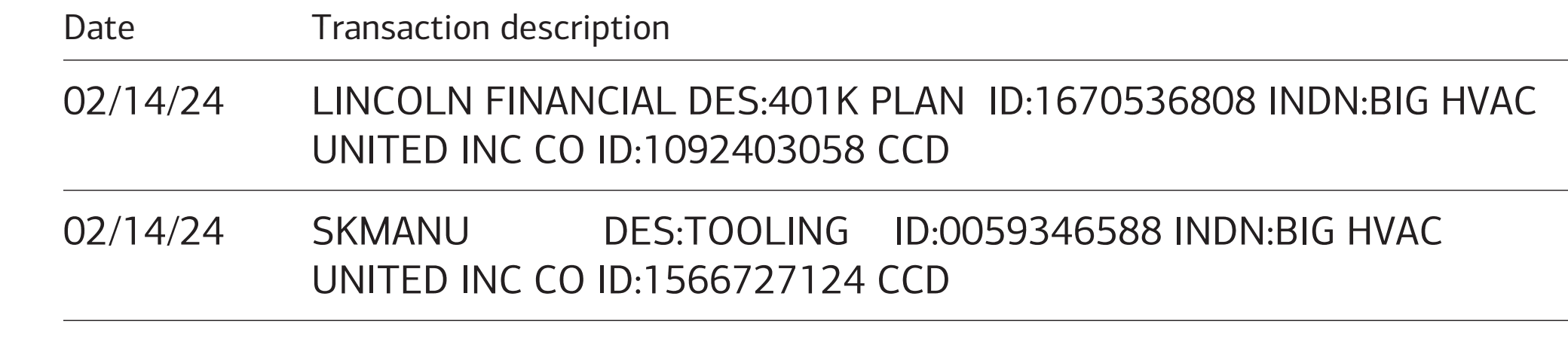
Every transaction
Daily balance
Liquidity
Cash flow
Transfers between accounts
Owner draws and contributions
Personal and non-business spending
Financing and lenders
Counterparties
Customer and vendor concentration
Overdrafts, NSF, and returned items
Undisclosed bank accounts
Questions about bank statement analysis
Does a deposit automatically count as revenue?
No. Review the transaction and its context before deciding how to treat it. A credit analysis should distinguish operating activity from transfers, financing and other sources of cash.
Can we upload data from a bank aggregator?
Supported Plaid and Finicity JSON transaction data can be uploaded. Confirm compatibility and the permissions in your provider agreement before using that path.
Is this an automated lending decision?
No. The workflow supports investigation and financial analysis. Analysts interpret the activity, select the appropriate treatment and retain responsibility for the credit review.
Examine the transactions behind the conclusion
Bring a representative statement package, including activity your team would normally investigate. Follow the cash-flow summary into its transactions and review how the evidence contributes to the credit discussion.